Spine Surgery in Thrissur: Minimally Invasive Care at Atreya Hospital
The Department of Spine Surgery at Atreya Hospital combines neurosurgeons and orthopedic spine surgeons on one team. Most patients are treated without surgery. Where an operation is the right answer, minimally invasive techniques reduce recovery time, blood loss, and hospital stay.
About the Department
The spine service brings two surgical viewpoints together. Neurosurgeons handle cases involving the spinal cord, nerve roots, and craniovertebral junction. Orthopedic spine surgeons focus on structural stability, deformity correction, and motion preservation. Patients are often seen jointly at the outset, then followed through diagnosis, surgery if required, and recovery by the same team. Imaging and operative infrastructure are shared with the Neurosurgery department and the Orthopaedics, Traumatology and Joint Replacement unit.
Conditions We Treat
Degenerative Spine Disease
Cervical and lumbar disc herniation (slipped disc), cervical and lumbar spinal stenosis, degenerative disc disease and cervical spondylosis, spondylolisthesis, and sacroiliac joint dysfunction.
Deformity
Adult scoliosis and complex adult deformity, kyphosis including post-tuberculous kyphotic deformity, flatback syndrome, and adolescent idiopathic scoliosis.
Trauma
Vertebral fractures across cervical, thoracic, and lumbar levels; spinal cord injuries with or without neurological deficit; craniovertebral junction injuries and atlanto-axial dislocation; and osteoporotic compression fractures.
Tumors and Infections
Spinal tumors (intradural, extradural, and vertebral column), spinal tuberculosis and other spine infections, and metastatic disease of the spine.
Pediatric and Congenital
Pediatric scoliosis and kyphosis, and congenital spinal malformations.
Failed Prior Surgery
Adhesion, recurrent disc herniation, and hardware failure after previous spine surgery.
Treatments and Procedures
Not every back or neck problem needs surgery. Most patients are managed with physiotherapy, medication, image-guided injections, and lifestyle modification. Surgery is offered only when it is likely to give a clearly better outcome than continued conservative care.
Minimally Invasive and Motion-Preserving
Microscopic and endoscopic lumbar discectomy, anterior cervical microdiscectomy and fusion, cervical disc replacement (arthroplasty), posterior cervical foraminotomy, and minimally invasive decompression for spinal stenosis.
Fusion and Stabilization
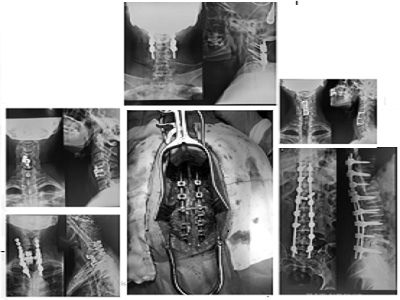
Posterior lumbar interbody fusion (PLIF) and transforaminal lumbar interbody fusion (TLIF) for spondylolisthesis, posterior stabilization for thoracic and lumbar fractures, and craniocervical junction fusion for atlanto-axial dislocation.
Vertebral Augmentation
Vertebroplasty and kyphoplasty for osteoporotic compression fractures.
Tumor and Complex Surgery
Microscopic excision of spinal tumors, deformity correction surgery for scoliosis and kyphosis, and revision surgery after failed prior spine procedures.
Interventional Pain Management
Transforaminal nerve root blocks, facet joint injections, and selective diagnostic blocks to localize the pain generator.
Post-surgical rehabilitation continues under the Physical Medicine and Rehabilitation team. Most patients begin gentle movement on the first post-operative day.
Advanced Technology and Facilities
Carl Zeiss Kinevo 900 Robotic Microscope
Spine surgery at Atreya shares the same microscope platform as our neurosurgery service, integrated with neuronavigation for precision in complex or revision cases.
Intraoperative Neuromonitoring
IONM is used routinely for cases where a nerve root or the spinal cord is at risk of injury. It provides real-time feedback to the surgeon during critical moments of the operation.
Post-Operative Recovery
Dedicated post-anesthesia care and ICU coverage for the first 24 to 48 hours after major cases.
Why Choose Atreya Hospital for Spine Surgery
Two specialties, one team
A neurosurgeon and an orthopedic spine surgeon consult and operate together. The plan is agreed jointly rather than in silos.
Conservative first, surgical when it counts
Most patients get better without surgery. When surgery is needed, minimally invasive techniques are used wherever the case allows, which typically means smaller incisions, less blood loss, and faster mobilization.
Real technology in the room
The Carl Zeiss Kinevo 900 microscope, intraoperative neuromonitoring, and neuronavigation are used routinely. These tools improve visualization and safety in complex or revision cases.
A recognized institution
NABH-accredited, 75-bedded multispecialty hospital and the first in Kerala to receive IGBC Platinum Certification. Over 5,000 surgeries completed across specialties; over 1.2 lakh outpatients served in five years.
Book a Spine Surgery Consultation
Book an appointment online, call our booking line, or reach out on WhatsApp. For spinal emergencies, use the 24-hour number below.
Book an Appointment (/contact-us/) · Call +91 9387668030 · Chat on WhatsApp (https://wa.me/919387668030) Emergency: +91 85920 00843