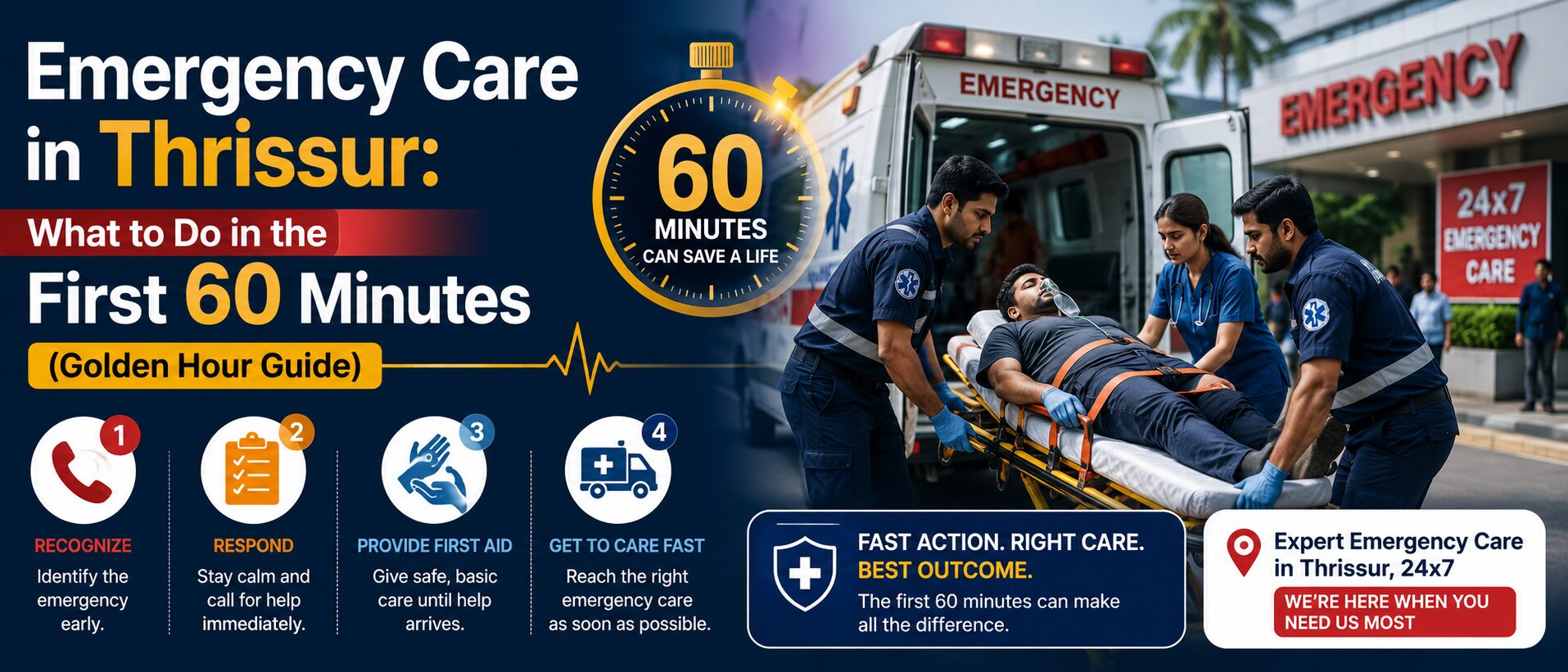
When your loved one collapses at home, or someone at a roadside accident loses consciousness, the first instinct is fear and confusion. But what every emergency doctor will tell you is that what you do in the next 60 minutes will determine everything. That window, often called the golden hour, is the most critical period in any medical emergency. It can be the difference between full recovery and lasting disability, or between life and loss.
The determining factor in this hour is how fast medical care begins. If you are in Thrissur and facing a medical emergency right now, here is exactly what you need to do.
Quick answer: Call emergency services immediately, note the exact time symptoms started, keep the patient still and calm, begin CPR if they are unresponsive and not breathing, and get to a 24/7 emergency hospital in Thrissur without delay. Do not wait for symptoms to improve.
What Is the Golden Hour in Emergency Medicine?
The golden hour refers to the first 60 minutes after a traumatic injury or acute medical event, during which prompt treatment significantly improves the chances of survival and recovery. The concept was developed by Dr R. Adams Cowley, a trauma surgeon who observed that critically injured patients had far better outcomes when they received definitive care within that initial hour.
According to the National Library of Medicine, for strokes, 1.9 million brain cells die every minute until blood flow is restored. In heart attacks, delay in restoring blood supply causes permanent damage to heart muscle. In trauma, uncontrolled bleeding and shock can rapidly lead to organ failure. In these instances, immediate medical treatment is the only thing that can make a difference.
However, the golden hour is not a rigid 60-minute countdown. Some emergencies, like anaphylaxis, demand intervention within minutes. The golden hour outlines a core principle for all medical emergencies, where the sooner care begins, the better the outcome.
What To Do In The First 60 Minutes: A Step-by-Step Guide
Here’s what you need to do in the first 60 minutes of a medical emergency. The important point is to stay calm, move through these steps in order, and get professional help as fast as possible.
Step 1: Recognize the Emergency and Note the Exact Time Symptoms Started
Before you can act, you need to understand what you are dealing with. Medical emergencies include sudden chest pain, loss of consciousness, facial drooping, arm weakness, slurred speech, severe bleeding, difficulty breathing, seizures, and signs of a serious allergic reaction.
The moment you recognize something is wrong, look at a clock or check your phone, and note down the exact time of the symptoms. Doctors rely on this information, especially in stroke and heart attack cases, where treatment decisions depend on how long the symptoms have been present. It is usually the first thing emergency teams will ask.
Step 2: Call Emergency Services Without Waiting
The next crucial step is to call for help immediately. Do not wait to see if the symptoms pass on their own. In Thrissur, you can reach Atreya Hospital’s emergency line at +91 85920 00843. The national ambulance helpline is 108.
Every minute you delay increases the risk of serious injuries or permanent brain damage. Waiting to see if the symptoms have recovered is one of the biggest mistakes people make during stroke or heart-related emergencies.
When you call, clearly tell the operator the patient’s location, the symptoms you are seeing, and when symptoms started. Stay on the call. They are trained to guide you through what to do next while help is on the way.
Step 3: Keep the Patient Safe, Still, and Calm
Once you have called for help, your job is to prevent further harm to the patient.
If the patient is conscious, help them sit or lie down in a comfortable position. Loosen tight clothing around the neck and chest. Do not give food, water, or medication unless a doctor tells you to.
In the case of a suspected heart attack, if the person is conscious, not allergic, and able to swallow, chewing a 325 mg aspirin can help.
In cases where the person is unconscious but still breathing, place them in the recovery position. Kneel beside them, take the arm farthest from you and place it at a right angle to their body, then roll them gently onto their side. This keeps the airway clear and prevents choking if they vomit.
Step 4: Begin CPR If the Person Is Unresponsive and Not Breathing
Our brain cells begin to die within 4 to 6 minutes without oxygen. If the patient is unresponsive and not breathing, start chest compressions immediately.
Place the heel of your hand on the center of the chest. Push hard and fast at 100 to 120 compressions per minute. Allow full chest recoil between each compression.
For untrained bystanders, hands-only CPR (compressions without rescue breaths) is highly effective and recommended. Continue compressions until the patient shows signs of life or trained emergency personnel arrive and take over.
Step 5: Control Severe Bleeding With Direct Pressure
If the patient is bleeding heavily, apply firm, continuous pressure to the wound using a clean cloth or clothing. Do not remove the cloth once applied. When the cloth gets soaked in blood, add more on top. Elevate the injured area above heart level if possible. Do not use a tourniquet unless you are trained to do so and bleeding from a limb is life-threatening and uncontrollable.
Step 6: Use the FAST Test for Stroke Symptoms
Use the FAST method to quickly check for stroke.
Face: Ask the person to smile and see if one side droops.
Arms: Ask them to raise both arms and check if one drifts downward.
Speech: Listen for slurred or unclear speech.
Time: If you notice any of these signs, call emergency services immediately.
Also watch for a sudden severe headache with no clear reason, vision loss in one or both eyes, confusion, or trouble walking. Even if the symptoms seem mild or go away, they still need urgent medical attention.
Step 7: Gather Key Medical Information
While waiting for the ambulance or preparing to drive to the hospital, collect key medical information and documents like the patient’s list of current medications, known allergies, any existing medical conditions (diabetes, hypertension, heart disease, previous strokes), and the name of their regular doctor.
Place any medication bottles or prescriptions in a bag to bring along. This information cuts down the time emergency doctors spend gathering history and speeds up treatment.
Step 8: Get to an Emergency Hospital in Thrissur Without Delay
If an ambulance is not available and the patient is stable enough to be moved, drive directly to the nearest emergency hospital. Do not stop at a clinic or pharmacy first. Call ahead so the emergency team can prepare.
Emergency medical services should spend less than 10 minutes at the scene of a trauma before transporting the patient to a hospital.
How to Identify the Most Common Medical Emergencies in Thrissur
- Heart Attack
Symptoms include pressure or tightness in the chest, pain radiating to the left arm, jaw, or back, sweating, nausea, and shortness of breath. In women, symptoms can present differently, often as unusual fatigue, jaw pain, or upper back discomfort without prominent chest pain. During this time, re-establishing blood flow to damaged heart muscle is most effective within 1.5 hours of symptom onset.
- Stroke
The FAST test covers the main signs. Beyond those, sudden loss of balance, vision changes in one or both eyes, and a sudden, intensely severe headache (often described as the worst headache of your life) are major red flags.
- Road Traffic Accidents and Trauma
In cases of trauma emergencies involving bleeding, possible fractures, head injuries, or internal damage, do not move the patient unless they are in immediate danger (from fire or traffic). Support the head and neck in the position found, apply pressure to visible wounds, and wait for trained help.
- Seizures
When you notice a person experiencing seizures, clear hard objects around them and turn them gently onto their side, and time the seizure. Do not attempt to hold them down. If the seizure lasts longer than 5 minutes, or the person does not regain consciousness after it stops, call for emergency help immediately.
Should You Call an Ambulance or Drive to the Hospital?
In most serious emergencies, calling an ambulance is the better option. Ambulances carry trained paramedics and equipment that can begin life-saving interventions during transport. This is especially important for heart attacks and strokes, where treatment can begin before the patient reaches the hospital.
Drive to the hospital yourself only if an ambulance will take significantly longer to arrive and the patient is stable and able to sit up. Never let the patient drive themselves. If you choose to drive, call ahead to the hospital’s emergency line so the team is ready when you arrive.
Why Choose Atreya Hospital, Thrissur During Emergencies
- Get immediate access to a 24/7 emergency unit, so you are never waiting for critical care when every second counts.
- Receive treatment in a NABH-accredited hospital that follows strict clinical and safety standards.
- Benefit from strong expertise in neurology and neurosurgery, where faster response directly improves survival and recovery outcomes.
- Get specialist care without delays, with doctors available around the clock for stroke, cardiac events, trauma, and neurological emergencies.
- Reduce treatment time during the golden hour, increasing the chances of better recovery in life-threatening conditions.
- Access comprehensive emergency handling for complex cases, including spinal injuries and severe trauma, all under one roof.
- Reach the hospital quickly due to its central location at East Fort, helping you avoid critical delays during emergencies.
Emergency contact: +91 85920 00843 Appointments: +91 93876 68030 Location: 13/356/1, East Fort, Thrissur, Kerala 680005
Frequently Asked Questions
The golden hour is the first 60 minutes after a serious injury or acute medical event, during which prompt treatment significantly improves survival and recovery. It was established by trauma surgeon Dr R. Adams Cowley, who found that patients treated within this window had far better outcomes. The concept applies to strokes, heart attacks, trauma, and other life-threatening conditions. While the exact time window varies by emergency type, the core principle is universal: faster care equals better outcomes. The term is now used broadly to stress the urgency of rapid intervention, not a strict 60-minute deadline.
Any loss of consciousness, chest pain, difficulty breathing, sudden severe headache, facial drooping, arm weakness, uncontrolled bleeding, or suspected fracture after an accident warrants immediate emergency care. Do not try to manage these at home or at a pharmacy. Mild symptoms that appear and disappear quickly, like temporary vision changes or sudden weakness, also need urgent evaluation because they can signal an impending stroke or cardiac event. When in doubt, call Atreya Hospital’s emergency line and describe the symptoms. The team will advise you.
Check if the person is responsive by tapping their shoulder and calling out to them. If they do not respond and are not breathing, call emergency services at 108 or +91 85920 00843 immediately and begin chest compressions at 100 to 120 per minute. If they are breathing, place them in the recovery position on their side. Note the time they collapsed, clear the area of hazards, and stay with them until help arrives. Do not give them anything to eat or drink, and avoid moving them unnecessarily if a spinal or head injury is possible.
Only if an ambulance is unavailable and the delay would be significant. Ambulances are preferable because paramedics can begin monitoring and medication during transport, reducing heart muscle damage before arrival. If you drive, call the hospital ahead so the team prepares a resuscitation bay. Keep the patient as calm and still as possible, avoid sharp driving, and do not let them walk into the hospital on their own. If they become unresponsive during transport, pull over safely and begin CPR while someone else calls for help.
Use FAST: Face drooping on one side, Arm weakness (one arm drifts down when raised), Speech difficulty or slurring, and Time to call emergency services. Additional warning signs include sudden vision loss in one or both eyes, sudden loss of balance or coordination, and a severe headache that comes on abruptly and feels unlike any headache before. Strokes are more common in people with hypertension, diabetes, or a history of smoking. Kerala’s high prevalence of these risk factors makes stroke awareness particularly important. Seek care at the first sign, not after waiting to see if it resolves.
Atreya Hospital operates a 24/7 emergency unit at East Fort, Thrissur, backed by specialist neurosurgery and neurology teams available round the clock. The hospital is NABH accredited, which means it meets national standards for patient safety, emergency protocols, and infection control. Emergency cases are triaged on arrival, and critical patients receive immediate specialist assessment. The hospital handles stroke, cardiac emergencies, trauma, spinal injuries, seizures, and post-surgical complications. You can reach their emergency line at +91 85920 00843 any time of day or night.
Do not give the patient food, water, or medication unless a medical professional advises it. Do not move a patient who may have a head or spinal injury. Do not leave an unconscious patient alone. Do not delay calling for help because you think symptoms might improve on their own. Do not attempt to perform procedures you are not trained for, such as removing embedded objects from wounds or applying a tourniquet without training. Avoid driving the patient to a clinic or pharmacy first; go directly to a hospital emergency department.
Yes, 108 is Kerala’s government emergency ambulance helpline and connects you to emergency medical services. For direct hospital contact and faster specialist coordination, you can also call Atreya Hospital’s dedicated emergency line at +91 85920 00843. When calling 108, give your exact location, describe the emergency clearly, state the patient’s approximate age and condition, and note when symptoms began. Stay on the line. The dispatcher can guide you through basic first aid steps while the ambulance is en route to your location in Thrissur.
Brain cells begin to die within 4 to 6 minutes without an adequate oxygen supply. After 10 minutes without CPR or defibrillation, the chance of survival with good neurological function drops sharply. This is why starting CPR immediately, before the ambulance arrives, matters so much. Every minute without compressions reduces survival odds. Research shows that bystander CPR can double or triple survival rates in out-of-hospital cardiac arrest. You do not need training to perform hands-only CPR. Push hard and fast in the center of the chest at roughly 100 compressions per minute.
Bring a list of all current medications with dosages, known drug allergies, existing medical conditions like diabetes, hypertension, or heart disease, the name and contact of the patient’s regular doctor, and the approximate time symptoms started. If the patient has a previous ECG report, scan, or discharge summary, bring it if it is immediately accessible, but do not delay leaving for the hospital to search for it. This information helps emergency doctors make faster decisions, particularly for patients on blood thinners or those with complex medical histories.