Most people wait too long before seeing a doctor about their knee. They try rest, hot water bags, the occasional pain tablet, and hope it passes. Sometimes it does. But when it doesn’t, the first question they ask is usually the right one: do I actually need surgery, or will physiotherapy sort this out?
The honest answer depends on the cause of your pain, how long you’ve had it, and how much it’s limiting your daily life. For most people, physiotherapy is the right starting point. Surgery becomes necessary only when the structural damage is severe and conservative treatment has not worked.
How Common Is Knee Pain Among Adults in Kerala and South India?
Knee pain, particularly from osteoarthritis, is a serious public health concern across South India. A 2024 study published in the journal Cureus found that over one-third of adults aged 40 and above in rural South India had knee osteoarthritis, with key risk factors including obesity, diabetes, sedentary work habits, and the frequent use of Indian-style squat toilets. A large pan-India study published in the Indian Journal of Orthopaedics estimated the overall prevalence of knee osteoarthritis at 28.7%, with women more affected than men.
Thrissur, like many cities in Kerala, has an ageing population. When combined with rising rates of lifestyle diseases, knee pain becomes a particularly prevalent concern. Beyond just older adults, ligament injuries, meniscal tears, and overuse conditions affect working-age adults and young athletes too.
What Are the Most Common Causes of Knee Pain?
Before deciding on a treatment path, your doctor needs to identify the underlying cause. Knee pain is not a single condition. It’s a symptom that can arise from several different structural problems.
- Osteoarthritis
Osteoarthritis (OA) of the knee is the most common cause of chronic knee pain in adults over 40. It occurs when the cartilage that cushions the knee joint gradually wears down, leaving bones to rub against each other. The symptoms include a dull aching pain that worsens with activity, morning stiffness, swelling, and a grinding or clicking sensation when you bend the knee. OA progresses in grades from mild (Grade I-II) to severe (Grade III-IV), and the grade largely determines whether physiotherapy or surgery is the better option.
- Meniscal Tear
The meniscus is a C-shaped piece of cartilage in the knee that acts as a shock absorber. Meniscal tear can be due to traumatic injuries, from a sudden twist or impact, or degenerative (from gradual wear, more common in adults over 40). Your treatment options depends on the type of meniscal tear you have.
Degenerative meniscal tears, which are extremely common, respond well to physiotherapy in most cases. Traumatic meniscal tear, however, require immediate surgery. A 2023 meta-analysis in the British Journal of Sports Medicine examining over 1,500 patients found that exercise therapy was as effective as surgery for degenerative meniscal tears, with fewer risks.
- ACL and Ligament Injuries
ACL (anterior cruciate ligament) tears are more common in athletes and younger adults. A complete ACL rupture often require a complete surgical reconstruction, especially if the person is active. However, for less intense ACL tears, starting with a rehabilitation program can delay or completely avoid surgery. Partial ligament injuries and sprains generally respond well to structured physiotherapy.
- Soft Tissue Conditions
Knee bursitis, patellar tendinitis, runner’s knee (patellofemoral pain syndrome), and IT band syndrome are all soft-tissue conditions that almost always resolve with physiotherapy, activity modification, and sometimes anti-inflammatory medication. Surgery is rarely, if ever, required for these conditions.
Surgery or Physiotherapy: What’s the Right First Step for Knee Pain?
In most cases, physiotherapy comes first.
This is not just the opinion of individual doctors. It is the formal recommendation of several major international medical organisations, including OARSI (Osteoarthritis Research Society International), NICE (National Institute for Health and Care Excellence), and the American Academy of Orthopaedic Surgeons (AAOS). Their guidelines consistently recommend exercise therapy, weight management, and physical rehabilitation as the core first-line treatment for knee pain before surgical options are considered.
The reason for starting with physiotherapy is simple. A significant number of patients experience meaningful pain relief and improved function through physiotherapy alone, while eliminating the risks that come with surgery.
When Is Physiotherapy the Right Choice for Knee Pain?
Physiotherapy is appropriate when:
- Your pain is mild to moderate and came on gradually
- You have early-to-moderate osteoarthritis (Grade I to Grade II)
- You have a degenerative meniscal tear without a locked knee
- You’ve sustained a ligament sprain (not a complete rupture)
- You have soft-tissue conditions like tendinitis, bursitis, or runner’s knee
- Your knee pain is linked to weak thigh muscles, poor posture, or faulty movement patterns
- You want to try a non-invasive route before committing to a procedure
A 2024 systematic review and network meta-analysis published in Physical Therapy found that physiotherapy interventions that were based on structured exercise programs showed superior short-term outcomes in pain reduction and knee strength compared to surgical treatment for non-traumatic degenerative meniscal conditions.
The review concluded that conservative treatment like phsiotherapy should be the first choice over surgery for this type of knee problem.
What Does Physiotherapy for Knee Pain Actually Involve?
A good physiotherapy programme for knee pain is more than just applying heat packs or ultrasound. It’s a structured, progressive plan that typically includes:
- Strengthening exercises: Taking up leg–based exercises builds strength in the quadriceps, hamstrings, hip abductors, and calf muscles and reduces the load placed on the knee joint itself.
- Manual therapy: Involves hands-on techniques to improve joint mobility and reduce pain.
- Proprioception and balance training: Teaching the knee and the muscles around it to stabilise the joint properly during movement.
- Gait retraining: Correcting how you walk or run to prevent abnormal stress on the joint.
- Hydrotherapy and electrotherapy: Tools like TENS, ultrasound therapy, and pool exercises are used in certain cases to manage pain and facilitate movement.
- Patient education: Guidance on activity modification, weight management, and exercises to continue at home for long-term benefit.
With a structure physiotherapy regime, initial improvement is typically seen within 6 to 12 weeks.
When Does Knee Pain Require Surgery?
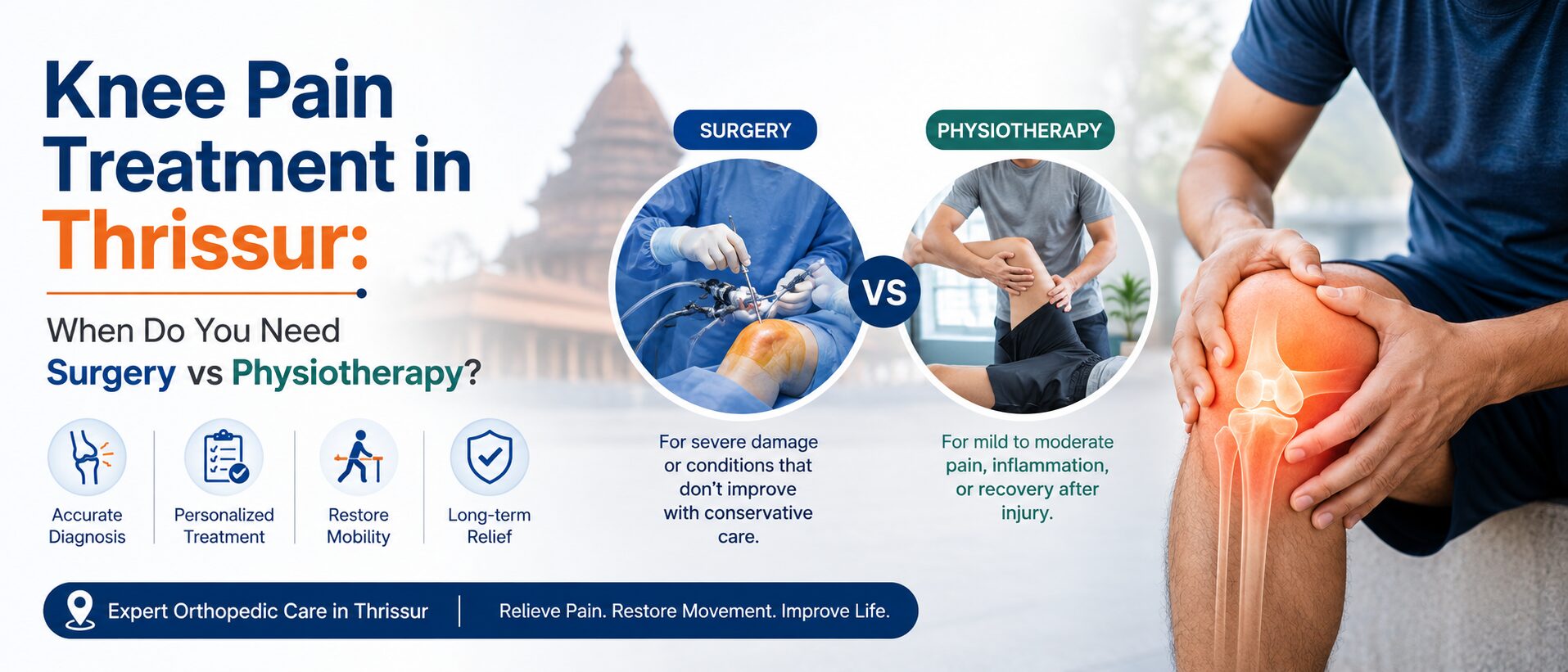
Surgery is the right choice when physiotherapy and other conservative measures have not provided sufficient relief, or when the structural damage to the knee is too significant to respond to non-surgical care.
Surgery is generally recommended when:
- You have severe osteoarthritis (Grade III or Grade IV) with bone-on-bone contact and significant joint deformity
- You have a complete ACL tear causing functional instability in an active lifestyle
- You have a mechanical block in the knee, such as a locked knee caused by a displaced meniscal tear
- A fracture within the knee joint that requires fixation
- Conservative treatment has been tried consistently for 3 to 6 months without meaningful improvement
- There is significant cartilage or ligament damage that makes the joint structurally unstable
Arthroscopic Surgery vs Knee Replacement: What Is the Difference?
These are two very different procedures for very different stages of knee problems.
- Arthroscopic surgery
A minimally invasive procedure where a small camera and specialised instruments are inserted through tiny incisions. It is generally used to repair or remove torn meniscus tissue, reconstruct a ruptured ACL, or remove loose cartilage fragments. Recovery is faster than open surgery, typically between 4 and 12 weeks depending on the procedure. - Total knee replacement (arthroplasty)
This is recommended for end-stage knee arthritis when the joint is badly damaged. The damaged surfaces of the knee are carefully replaced with metal and plastic implants. It is a major procedure with a longer recovery period of 3 to 6 months, but it produces significant and durable pain relief for patients with advanced disease. Modern knee replacement surgery at well-equipped hospitals has very high long-term success rates, and most patients regain the ability to walk, climb stairs, and carry out daily activities without pain.
How Do Orthopaedic Doctors in Thrissur Decide Between Surgery and Physiotherapy?
Before making any decisions, doctors conduct a thorough clinical evaluation to understand the root cause of the knee problem. At a multispeciality hospital like Atreya Hospital in Thrissur, this typically involves:
- Evaluating the Clinical history: Understanding when the pain started, what triggers it, what makes it better or worse, and how much it limits your activities.
- Comprehensive Physical examination: Assessing the range of motion, joint stability, areas of tenderness, swelling, and the way you walk.
- Imaging: X-rays are used to assess bone structure, joint space narrowing, and osteoarthritis grading. MRI gives detailed information about soft-tissue structures including the meniscus, ligaments, and cartilage. The results of these tests, combined with the clinical picture, helps in an informed decision in whether surgery is necessary.
- Trial of conservative treatment: In most cases, a structured physiotherapy programme is recommended first. If you complete a proper course and your pain remains severe or function continues to deteriorate, surgical options are then considered and evaluated seriously.
Conclusion
Knee pain is not something that should be ignored. Whether you are experiencing a sudden discomfort or involved in a critical injury, it’s always important to go for an expert medical evaluation. Most people usually try to alleviate the pain using DIY methods. Those can work, but only upto a certain point. For serious knee problems, visiting a doctor is the best option.
The question of whether you need a physiotherapy or surgery ultimately depends on your condition. For minor injury or knee condition, physiotherapy is the best option. Surgery comes into play only when conservative treatment has failed or when there’s a serious injury. In any case, doctors in Thrissur will conduct a comprehensive medical evaluation before making a decision.
Don’t Wait For The Symptoms To Get Worse. Book Your Appointment Today
Atreya Hospital in East Fort, Thrissur is a NABH-certified multispeciality hospital serving the region since 2008. Patients experiencing knee pain can access clinical evaluation, imaging, physiotherapy, and surgical consultation under one roof, with a treatment approach that prioritises the right intervention over a rushed one.
Our orthopaedics services cover trauma, fractures, deformative corrections, joint replacements, and arthroscopy, with a team of experienced doctors and state-of-the-art equipment.
For appointments, call +91 9387668030 or visit atreyahospital.co.in.
Frequently Asked Questions
Physiotherapy can produce long-lasting relief for many types of knee pain, but a “permanent cure” depends on the underlying cause. For soft-tissue conditions, muscle imbalances, and early-stage osteoarthritis, a structured programme can eliminate pain and restore function for years, especially when patients maintain their exercises and manage contributing factors like weight. For progressive conditions like severe osteoarthritis, physiotherapy manages symptoms and slows deterioration but does not reverse structural damage. Your treating doctor can give a realistic prognosis based on your diagnosis and imaging results.
Most patients notice meaningful improvement within 6 to 12 weeks of consistent physiotherapy. The timeline varies based on the severity of the condition, session regularity, and commitment to home exercises. Soft-tissue injuries and mild osteoarthritis respond faster than advanced structural problems. It’s important to complete the full recommended course rather than stopping when pain first eases, since the underlying muscle weakness and movement patterns take longer to fully correct.
Yes, knee replacement surgery is safe for elderly patients and is most commonly performed in people above 60. Modern surgical techniques and post-operative care have made it a routine and highly successful procedure. Suitability depends on the patient’s overall health, heart and lung function, and whether systemic conditions are under control. A pre-surgical evaluation will flag any risks. The majority of elderly patients who undergo knee replacement report significant improvement in pain, mobility, and quality of life within a few months.
Straight leg raises, quad sets, seated knee extensions, and step-ups are among the most effective home exercises for knee pain. These exercises strengthen the quadriceps and hamstrings, which are the primary muscle groups that support and stabilise the knee joint. Low-impact activities like swimming, cycling on a stationary bike, and walking on flat surfaces are also beneficial. Exercises that involve deep knee bending, squatting below 90 degrees, or high-impact jumping should be avoided until cleared by your physiotherapist. Always get a proper assessment before starting a self-directed exercise programme to ensure you’re doing exercises appropriate for your specific condition.
Degenerative meniscal tears, which are common in adults over 40, frequently improve without surgery through physiotherapy and activity modification. The outer portion of the meniscus has a blood supply and has some capacity to heal, but the inner portion does not. Whether a tear heals depends on its type, size, location, and the patient’s age and activity level. Traumatic tears in younger people, or those causing a locked knee or persistent mechanical symptoms, are more likely to need surgical intervention. A doctor’s evaluation along with an MRI scan is needed to determine the nature of the tear and the appropriate treatment path.
You should see a doctor if your knee pain has lasted more than two weeks without improvement, if there is significant swelling, if you cannot fully straighten or bend the knee, if the knee feels unstable or gives way while walking, or if the pain is severe enough to interfere with sleep or daily activities. A sudden locking of the knee, a popping sound at the time of injury, or visible deformity are signs that require urgent evaluation. Mild soreness after exercise that settles within a day or two is usually not a cause for concern, but any persistent or worsening pain deserves proper assessment to rule out structural damage.
Recovery from knee arthroscopy varies depending on what was done during the procedure. Simple procedures like removal of loose bodies or minor meniscal trimming typically allow patients to walk with minimal support within a few days, with return to most activities in 4 to 6 weeks. ACL reconstruction involves a longer recovery of 6 to 9 months before returning to sport, since the reconstructed ligament requires time to fully integrate and strengthen. A structured physiotherapy programme is a critical part of post-surgical recovery and significantly influences the final outcome.
Yes. A large pan-India study found the prevalence of knee OA among women to be 31.6% compared to lower rates in men, with menopause identified as a key contributing factor. Hormonal changes after menopause are thought to reduce the protective effect of oestrogen on cartilage. Women also tend to have different hip and knee biomechanics that increase joint stress over time. Knee pain from ligament injuries and sports-related conditions, however, is common in both men and women.
Weight loss is one of the most evidence-backed non-surgical interventions for osteoarthritis-related knee pain. Each kilogram of body weight lost reduces the force through the knee joint by roughly 4 kilograms during walking. For patients with mild-to-moderate osteoarthritis, significant weight loss combined with structured exercise can reduce pain substantially and slow joint deterioration, potentially delaying or avoiding surgery for years. If the structural damage is already severe, however, weight loss alone is insufficient and surgical evaluation remains necessary.
Atreya Hospital in East Fort, Thrissur is a NABH-certified multispeciality hospital with over 15 years of experience serving the region. Patients benefit from access to specialist consultations, advanced imaging, and both surgical and rehabilitation services within a single facility. The hospital’s approach prioritises accurate diagnosis before recommending any treatment, ensuring that patients are not pushed toward surgery when conservative care is appropriate and not kept waiting for necessary intervention when surgery is the right answer. For those seeking a second opinion, an initial consultation, or ongoing management of knee pain in Thrissur, the hospital can be reached at +91 9387668030 or through atreyahospital.co.in.