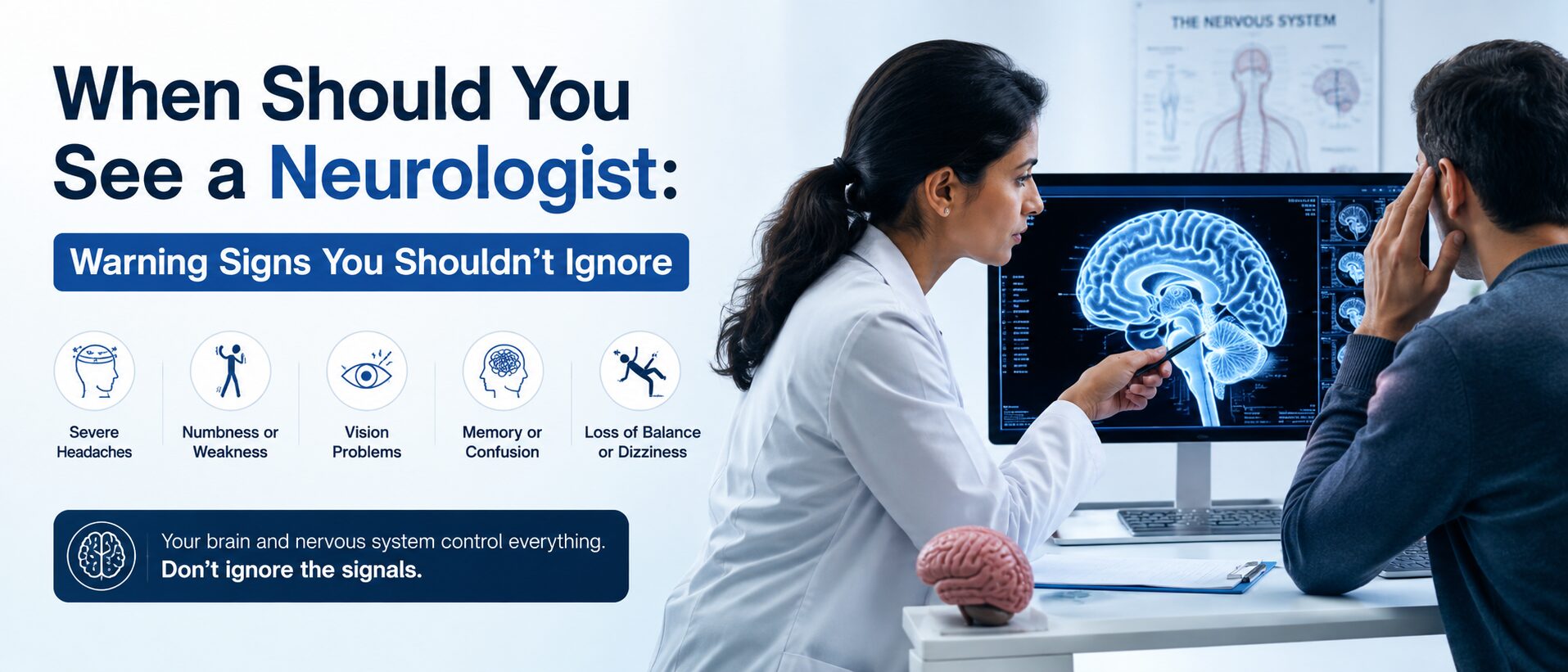
A compassionate guide to understanding when professional neurological evaluation matters
You know that feeling. A persistent headache that won’t go away. Fingers tingling for weeks. A moment where you can’t find a word you’ve used a thousand times. You tell yourself it’s stress or aging—and maybe it is. But there’s that voice: “Is something actually wrong?”
Here’s the truth: most symptoms are harmless and pass on their own. But sometimes, your body is sending an important message. When symptoms persist, keep returning, or interfere with daily life—that’s when listening matters. That’s when seeing a neurologist becomes important.
Why Early Diagnosis Matters
Your nervous system manages everything: how you walk, think, remember, feel, and function. When something’s not quite right, we often miss early signs because they’re subtle.
Many neurological conditions respond significantly better to treatment when caught early. According to the World Health Organization (WHO), neurological disorders affect over 1 billion people globally, making early recognition crucial.
Early diagnosis helps by identifying the actual cause, beginning appropriate treatment sooner, preventing complications, improving long-term quality of life, and providing reassurance when symptoms have simple, treatable causes.
Five Key Warning Signs
1. Headaches That Are New or Worsening
Most headaches are harmless, but see a neurologist if: headaches are more frequent than usual, becoming increasingly severe, waking you from sleep, accompanied by vision changes or weakness, or feel like “the worst headache of your life.” These patterns warrant professional evaluation.
2. Persistent Numbness or Tingling
Temporary tingling from sitting awkwardly is normal. Persistent numbness in hands, arms, legs, or face—especially one-sided weakness or difficulty with daily activities—deserves evaluation. These can indicate nerve compression, peripheral neuropathy, or vitamin deficiencies.
3. Frequent Dizziness or Balance Problems
Dizziness after standing too quickly is common. Recurring dizziness affecting your confidence or safety, accompanied by vision changes or frequent falls, requires professional assessment to determine if the cause is neurological or related to your inner ear.
4. Memory Changes Affecting Daily Life
Forgetting where you placed keys is normal. Frequently forgetting recent conversations, getting lost in familiar places, or personality changes deserve evaluation. Memory problems can stem from treatable causes: vitamin deficiencies, thyroid disorders, medication effects, or depression.
5. Tremors or Involuntary Movements
Persistent shaking that interferes with writing or eating, new stiffness, involuntary movements, or even brief episodes of losing awareness warrant neurologist evaluation to identify the underlying cause.
Emergency Warning Signs: Call Immediately
Seek emergency care for:
• Sudden weakness or numbness on one side of your body
• Sudden difficulty speaking or understanding speech
• Sudden loss of vision
• A sudden, severe headache unlike any before
• Loss of consciousness or seizures lasting 5+ minutes
In conditions like stroke, every minute counts. Rapid treatment significantly improves outcomes.
| Symptom Pattern | Action | Timeline |
| Sudden neurological changes | Call emergency services | Immediately |
| Severe headache, confusion, fever | Go to emergency department | Within 1 hour |
| Worsening symptoms, persistent numbness | Schedule neurologist appointment | Within 1-2 weeks |
| Mild memory changes, occasional dizziness | Schedule neurologist appointment | Within 2-4 weeks |
What to Expect During Your First Consultation
A neurologist consultation is a conversation combined with a physical examination. Your doctor will ask when symptoms started, how often they occur, how they affect your life, your medical history, medications, and family medical history. This conversation, combined with systematic examination of your muscle strength, reflexes, balance, sensation, vision, speech, and memory, helps identify what’s happening with your nervous system.
Based on findings, your neurologist may recommend MRI (detailed brain imaging), CT scan (rapid imaging), EEG (brain electrical activity), EMG (nerve and muscle function), or blood tests. Not every patient needs every test—your neurologist recommends only what’s necessary.
Neurological Care at Atreya Hospital, Thrissur
If you’re seeking neurological evaluation in Thrissur or Kerala, or traveling from abroad for specialized care, Atreya Hospital combines clinical expertise with genuine compassion.
Our Clinical Credentials
NABH Accreditation: Reflects adherence to nationally recognized quality and patient safety standards.
IGBC Platinum Certification: One of Kerala’s most environmentally sustainable hospitals.
Carl Zeiss Robotic Microscope: Provides highly magnified, precise visualization during complex brain and spine surgeries.
5,000+ Successfully Completed Surgeries: Demonstrating extensive clinical experience and proven track record.
Our approach combines comprehensive evaluation supported by modern diagnostics, multidisciplinary team coordination, personalized treatment plans, and dedicated international patient support. Whether you’re a Thrissur resident or traveling from abroad, we focus on accurate diagnosis and compassionate care.
Frequently Asked Questions
See a neurologist if headaches are new, worsening, waking you at night, accompanied by vision changes/weakness, or feel like the worst ever. These patterns suggest professional evaluation is needed.
Most headaches are tension-related or migraines manageable with primary care. However, changes in your usual pattern—becoming more frequent, severe, or different—warrant evaluation. Red flags include headaches that wake you from sleep, those with neurological symptoms, or sudden-onset severe headaches, which could indicate migraine progression, increased pressure, or other treatable conditions.
Temporary tingling from sitting awkwardly is normal. Persistent numbness may relate to nerve compression, vitamin deficiencies, diabetes, or neurological disorders and deserves assessment.
Not every tingling indicates a serious problem. Temporary numbness from pressure resolves within minutes and is harmless. However, persistent tingling—especially if recurring, affecting fine tasks, or accompanied by weakness—deserves investigation. Causes range from vitamin B12 deficiency (correctable with supplementation) to carpal tunnel syndrome (treatable) to diabetes-related neuropathy. Evaluation identifies the cause so treatment can be appropriately targeted.
Yes, stress causes headaches, dizziness, muscle tension, and concentration problems. However, persistent symptoms worsening over time or accompanied by weakness/numbness should be evaluated professionally.
Stress triggers real physiological symptoms: tension headaches, muscle tightness, and dizziness. These are legitimate stress responses. However, distinguish between stress-triggered symptoms and those persisting independently of stress. If symptoms worsen over weeks or months despite stress reduction, professional evaluation helps determine whether something else is happening alongside stress.
Neurologists diagnose and treat using medications and non-surgical approaches. Neurosurgeons perform surgery when conditions require operative intervention. Many patients benefit from both specialists coordinating care.
Neurologists complete medical school and specialized neurology training, focusing on diagnosis and medical management. Neurosurgeons complete medical and surgical training, performing operations on the brain, spinal cord, and peripheral nerves. At Atreya Hospital, our teams work collaboratively, ensuring comprehensive care whether your condition requires medical or surgical management.
Yes, depending on underlying cause. Many memory problems stem from treatable conditions like vitamin deficiencies, thyroid disorders, medication side effects, depression, or sleep problems. Early evaluation identifies reversible causes.
Memory problems have multiple possible causes. Vitamin B12 deficiency, hypothyroidism, certain medications, depression, and sleep apnea all cause memory difficulties—and all are treatable. Early neurological evaluation helps identify these reversible causes before considering progressive conditions, allowing interventions proven to slow progression.
You’ve Been Wondering. It’s Time to Get Answers.
Whether your symptoms are mild or concerning, a neurological evaluation brings clarity and peace of mind.
Schedule a consultation with our neurology team today.
Medical Disclaimer
This article is for educational purposes only and is not a substitute for professional medical advice. Individual symptoms vary significantly. If you have persistent neurological symptoms, consult a qualified healthcare professional. For emergencies, call emergency services immediately.
Atreya Hospital is NABH-accredited and follows Indian Medical Council guidelines. We do not make absolute cure claims. Treatment recommendations are individualized based on comprehensive patient evaluation.